
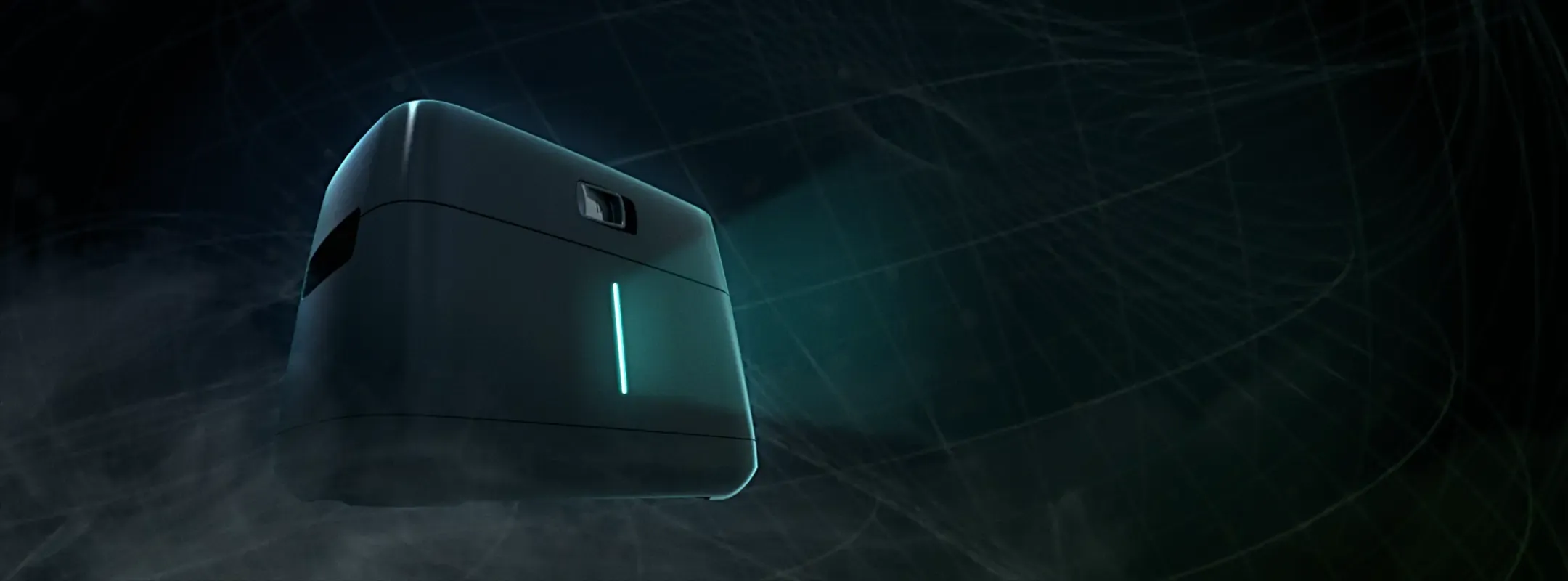
Biothreat Detection Suite
Maintain CBRN readiness with Biomeme’s fully automated, ultra-portable biowarfare agent identification platform.
What Is Biothreat Detection?
Biothreat detection is the process of identifying biological warfare agents and pathogens using molecular or immunological methods. The core techniques are real-time PCR and isothermal, which target specific DNA or RNA sequences unique to an agent, and lateral flow immunoassays, which detect proteins associated with a given agent — both capable of operating outside a traditional laboratory.
Biological agents are the hardest of the four CBRN domains to confirm. Chemical, radiological and nuclear threats announce themselves through physical signatures that established instrument classes measure directly. A bacterium or virus does not. Identifying one means finding and reading its genetic material — which is why biological confirmation has historically been the step that sent a sample back to a reference laboratory.
How Biological Threat Detection Works
Three method classes dominate field biological detection. They are not interchangeable — each answers a different question at a different level of confidence.
Lateral flow immunoassay (LFI)
Also called handheld assays (HHAs), a strip test that detects proteins on an agent's surface. Results in ~20 minutes, minimal training, very low cost per test. Because a surface protein is a less unique identifier than a genetic sequence, results are presumptive and susceptible to cross-reactivity with near-neighbor organisms. While these tests are simple to run they are challenging to develop, so adding a new assay is complex and time-consuming.
Presumptive
Nucleic acid amplification test (NAAT)
Two types of chemistries: real-time PCR and isothermal. Both amplify and detect a DNA or RNA sequence unique to the target agent, measuring fluorescence as amplification proceeds. Sensitive enough to identify an agent from a few strands of genetic material, and specific enough to differentiate closely related organisms. Results in 5–75 minutes depending on assay. The reference standard used by public health laboratories. NAATs are generally easier and faster to develop than LFIs, making them ideal when you need to rapidly develop new assays for novel targets.
Confirmatory — Biomeme's approach
Sequencing
A target-agnostic, information-rich approach that can detect unexpected, novel or genetically diverse organisms while also providing strain, mutation and resistance information. Its breadth is a major advantage when predefined assay targets may miss relevant biology. However, sequencing is generally less sensitive than targeted NAATs at low target abundance and requires expensive equipment, complex workflows and bioinformatics, specialized personnel, and longer time-to-result (hours to days), limiting its utility for rapid point-of-need testing.
Varies by protocol
The Biomeme/5 uses isothermal nucleic acid amplification chemistry with fully automated, integrated sample preparation — combining the confidence of the molecular method with the operational simplicity that previously belonged only to lateral flow immunoassays.
For the full method-class comparison table — basis of identification, confidence level and principal limitation for each — see the technical reference PDF.
Presumptive vs. Confirmatory Identification
This distinction determines what a commander can actually do with a positive result, and it is the single most consequential difference between field biological detection systems.
Detection
An instrument indicates that something anomalous is present — a change in particle count, fluorescence or another physical signature — without identifying what it is. Detection answers "is there something here?" and is the trigger for sampling.
Typical methods: Aerosol particle counters, biological triggers, standoff sensors
Presumptive identification
A screening assay indicates that a specific agent is likely present. Presumptive results are actionable for immediate force protection decisions but are not definitive, and doctrine generally requires them to be followed by confirmatory testing before conclusions are drawn.
Typical methods: Lateral flow immunoassays, handheld antibody-based assays
Confirmatory identification
A method with high sensitivity and specificity confirms the identity of the agent — traditionally requiring a fixed reference laboratory. Nucleic Acid Amplification Tests (NAATs), using real-time PCR or isothermal chemistry, is the reference standard here because it verifies an agent by its unique DNA or RNA sequence rather than by a surface protein, and can do so from very small quantities of genetic material.
Typical methods: Real-time PCR, isothermal, sequencing, reference laboratory culture
Why this matters operationally
A presumptive positive leaves a team in protective posture, an area cordoned and an operation disrupted, pending laboratory confirmation that may be hours or days away. In practice the majority of field alarms are negative — so the practical value of confirmatory identification in the field is often the speed with which a threat can be ruled out and normal operations resumed.
The Biomeme/5 delivers confirmatory-grade NAAT results at the point of sampling in less than 15 minutes. Read the shorter overview in the context of full-spectrum CBRN on our CBRN detection hub, the full method and identification-level breakdown in our technical reference PDF, or what this gap actually costs operationally in Closing the CBRNE Gap.
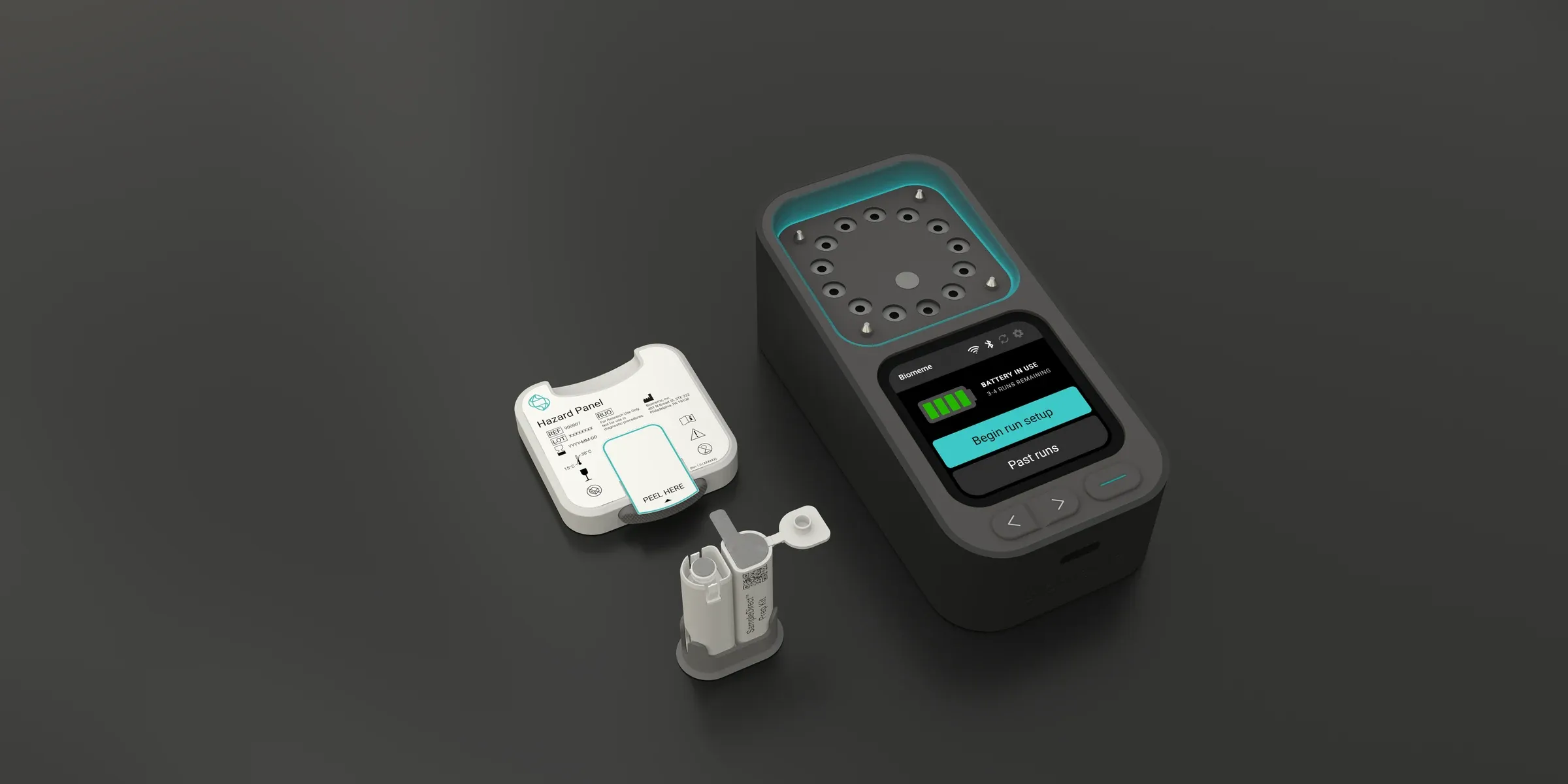
Biomeme/5
Offering CBRN professionals the capability for multiplexed real-time detection, the platform can identify up to 60 DNA/RNA targets from a single sample run in 5–15 minutes (depending on assay). The Biomeme/5 delivers confirmatory-grade results directly in the field without the need for specialized lab equipment or extensive training.
Backed by a 1-year standard warranty to ensure your satisfaction and device performance. For those seeking additional protection and service, we offer an extended warranty (+1-year SKU: 9000010, +4-years SKU: 9000011) and on-site training (SKU: 80000002) to enhance your experience and maximize device utility.
Key Specs
5–15 mins
Time-to-Result
5 hours
Battery Life (10–20 test runs)
12
Reaction Wells
5
Color Channels
60
Max Targets
USB-C/BLE/WiFi
Connectivity
ATAK
Integration
2 lbs
Weight w/ Batteries
80 in³
Volume
Our Field-Friendly & Shelf-Stable Tests
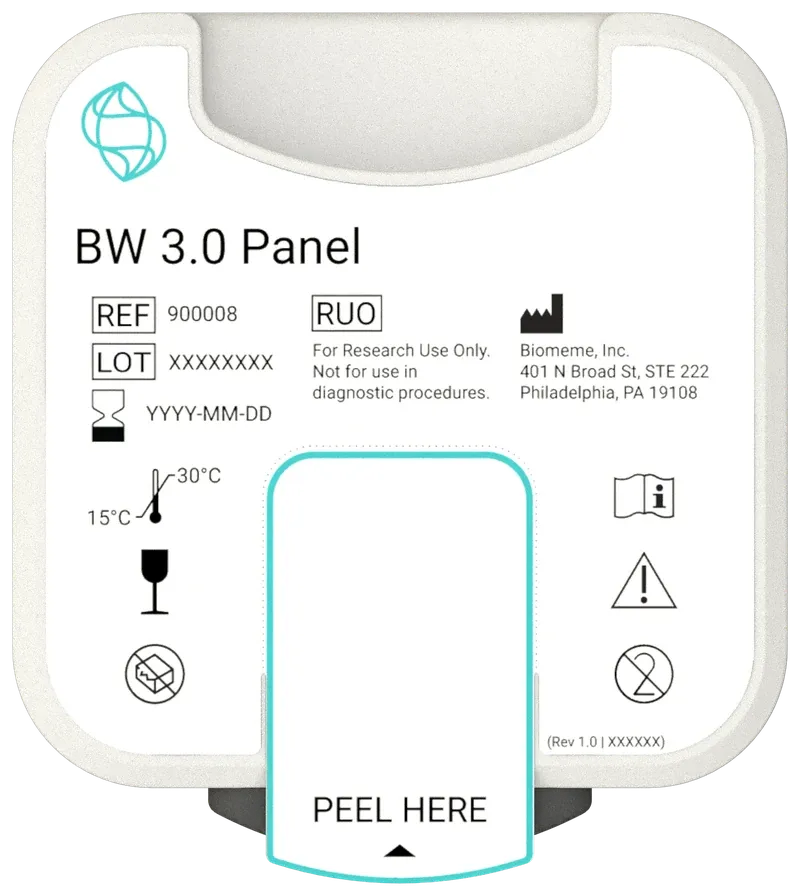
Biomeme/5 BW3.0 Biowarfare Agent Identification Panel
SKU: 900008 (available 2027)
Elevate your defense capabilities with Biomeme's BW3.0 Panel, engineered for the rapid identification of 29 critical biowarfare agents in less than 15 minutes. Funded by the US DoW, this nucleic acid amplification test panel is your frontline tool in biodefense, offering comprehensive analysis with single-use cartridges. Each cartridge is prepped with all necessary multiplexed molecular assay components, featuring shelf-stable lyophilized reagents for logistical simplicity and operational efficiency in the field.
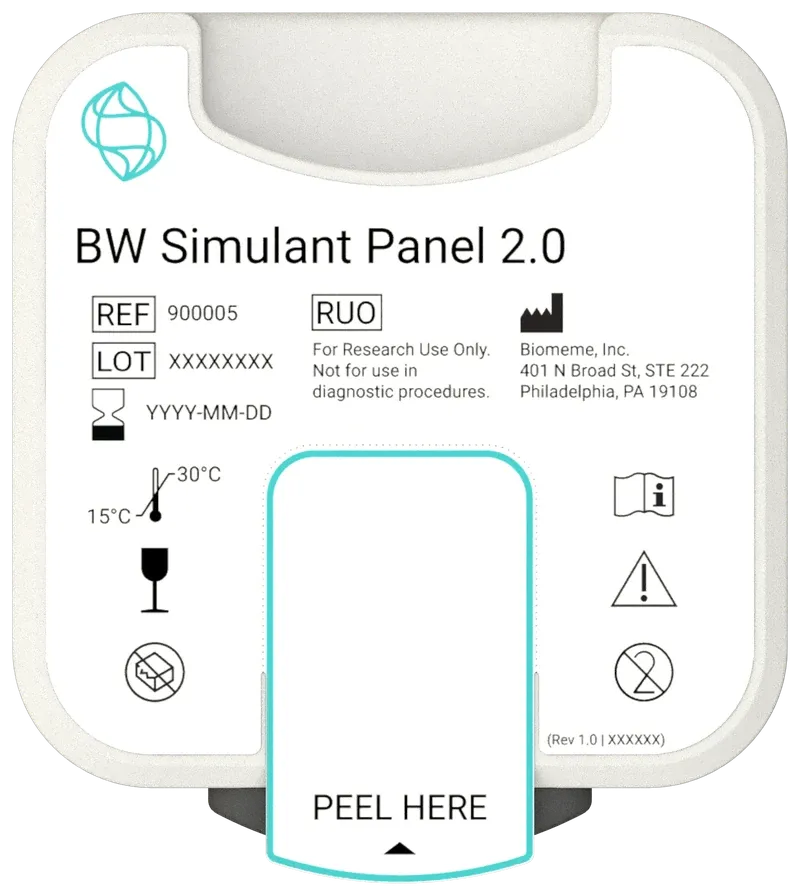
Biomeme/5 BW Simulant Panel
SKU: 900005
Designed for realistic training exercises utilizing actual biowarfare agent simulants. Identifying four common biowarfare simulant organisms, this panel provides an authentic experience for responders, enhancing preparedness without the risk of handling actual BSL2–4 biothreats. Like the Hazard and BW3.0 Panels, it uses single-use test cartridges with the same user workflow and all essential multiplexed molecular assay components, including shelf-stable lyophilized reagents, ensuring readiness in field bio-detection exercises.
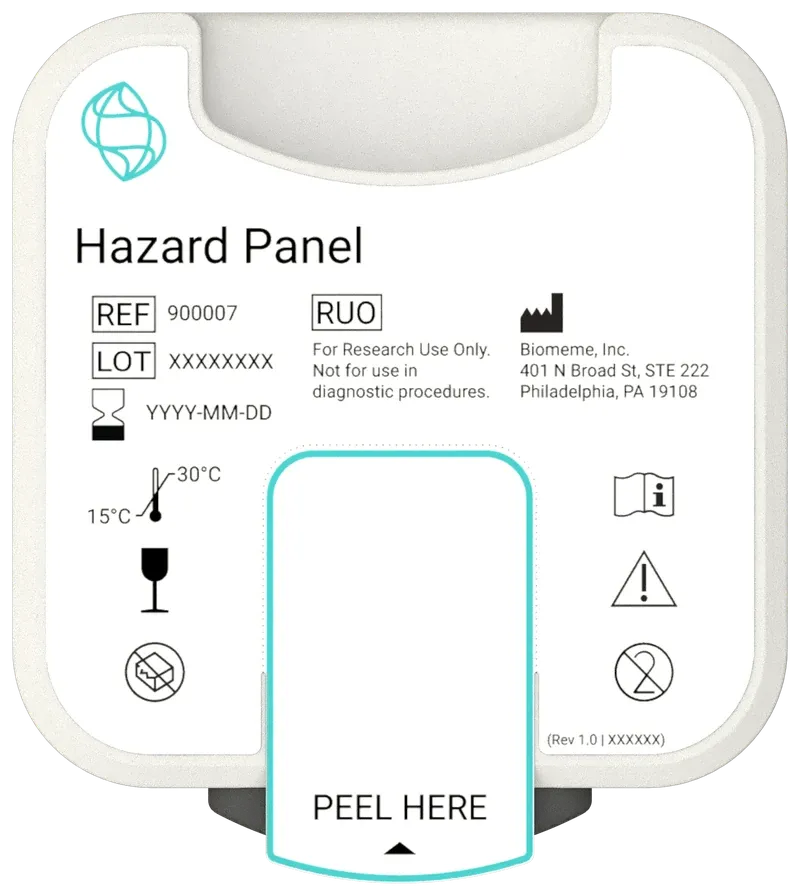
Biomeme/5 Hazard Panel
SKU: 900007
Elevate your biosurveillance capabilities with Biomeme's Hazard Panel, engineered for the rapid identification of 17 critical biothreats in less than 15 minutes. This nucleic acid amplification test panel is your frontline tool in biosurveillance, offering comprehensive analysis with single-use cartridges. Each cartridge is prepped with all necessary multiplexed molecular assay components, featuring shelf-stable lyophilized reagents for logistical simplicity and operational efficiency in the field.
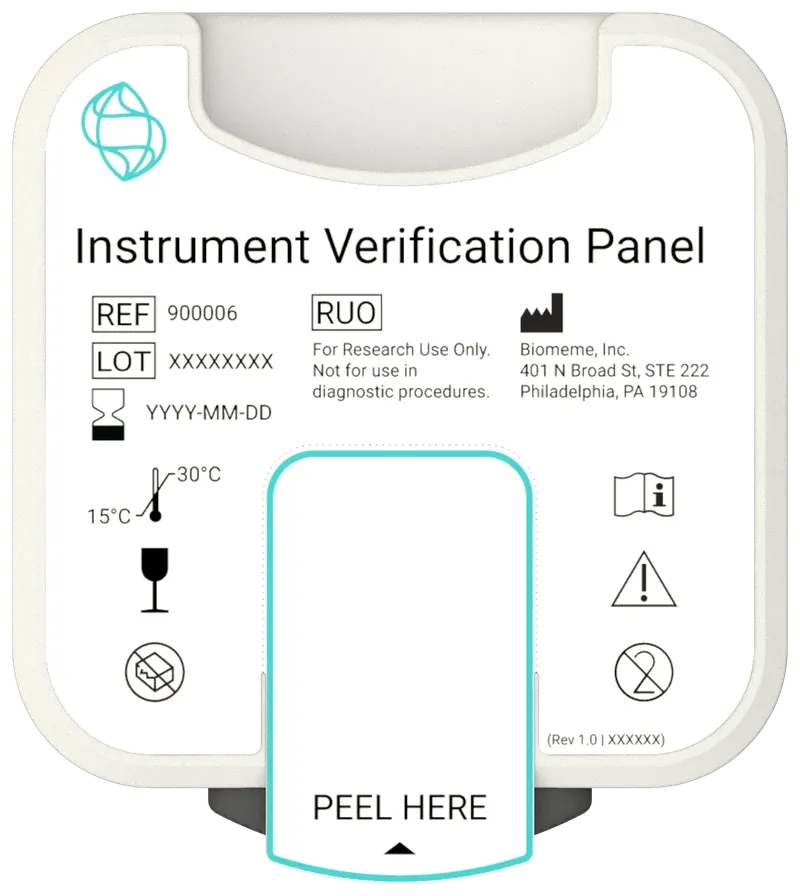
Biomeme/5 Instrument Verification Kit
SKU: 900006
Verify your Biomeme/5's precision with Biomeme's Instrument Verification Kit. Designed for straightforward performance checks, this kit has everything you need to verify your instrument's functionality and readiness for biowarfare agent identification. It enables a simple and efficient verification process, delivering clear pass/fail results to maintain detection accuracy and reliability. Ideal for routine assessment.
Field Sample Collection Accessories
Every Biomeme/5 panel order already includes the collection components needed to run its tests. These are the standalone restock and add-on kits for extended environmental sampling.
SampleDirect Kit for Environmental Samples
SKU: 900009
Five each of a fixed-volume liquid transfer pipette, swab-dropper bottle, and SampleDirect prep device — the components used to collect and prep an environmental sample for any Biomeme/5 panel.
Pre-Filter Kit for Environmental Samples
SKU: 900013 · Optional
Five each of a 1 mL syringe and 5 µm pre-filter attachment, for environmental samples that need pre-filtration before running on a Biomeme/5 panel.
Made in the USA
Our field-friendly products were designed for the unfriendliest conditions. We stand behind everything we make. And we make everything right here at our HQ in Philadelphia, PA. Our labs, testing, and manufacturing are all on site, affording complete oversight.
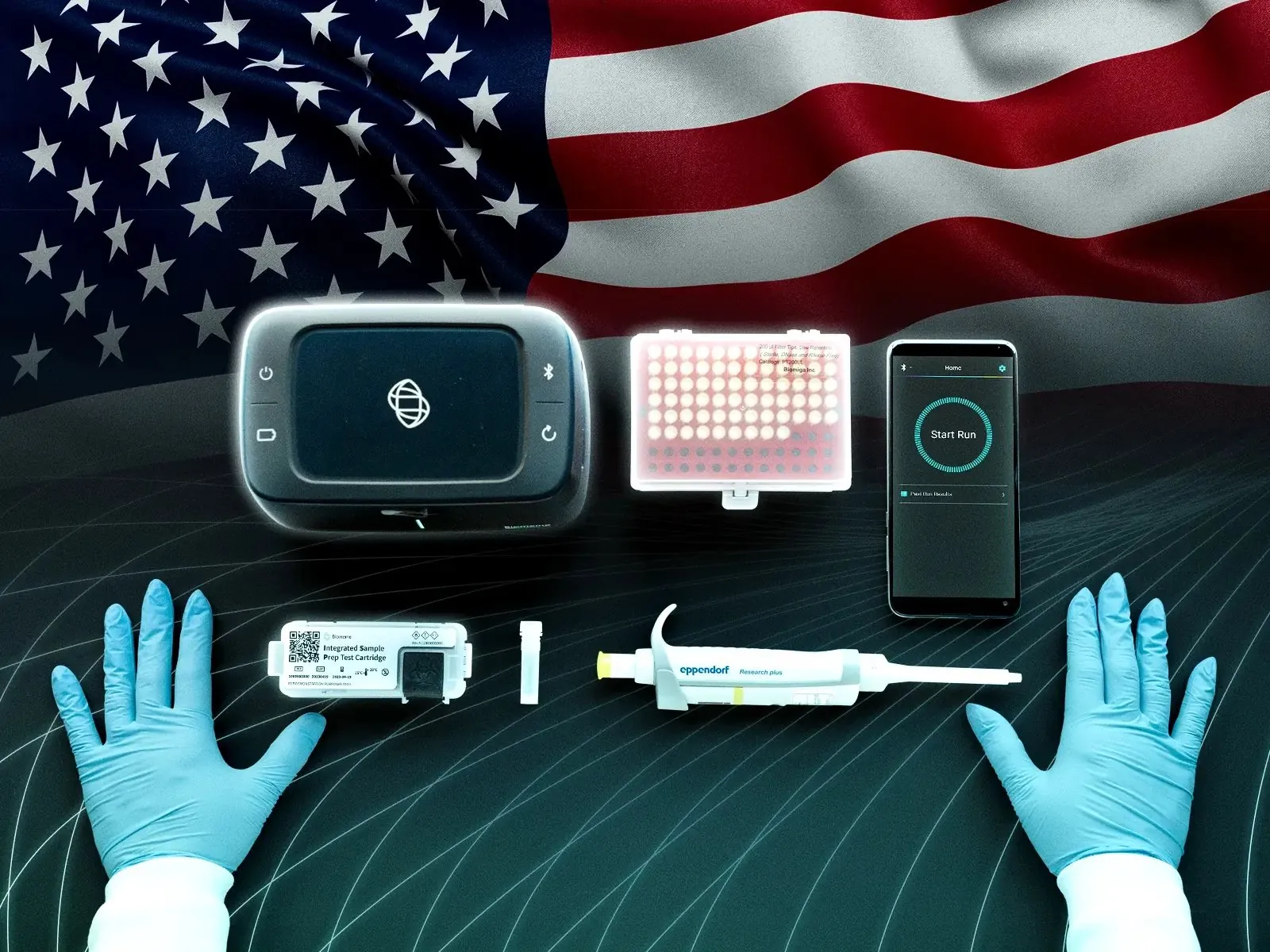
How Biomeme Stacks Up
Compared to the BioFire Razor® Mk II Detection System, Biomeme's Franklin® ISP platforms distinguish themselves by being a third lighter and less than half the size, offering enhanced efficiency with the ability to detect twice as many targets, requiring no preliminary sample preparation, and delivering confirmatory results.
| Spec | Biomeme/5 | Biomeme Franklin three9 ISP | BioFire RAZOR MK II |
|---|---|---|---|
| Chemistry | Isothermal | Real-Time PCR | Real-Time PCR |
| Weight | 2 lbs | 4 lbs | 11 lbs |
| Dimensions | 7.8 in L x 3.8 in W x 2.7 in H | 4.5 in L x 7.0 in W x 5.0 in H | 4.5 in L x 10 in W x 7.5 in H |
| User Interface | Integrated Touchscreen, Physical Buttons | Smartphone App | Integrated Screen with Physical Buttons |
| Connectivity | USB-C, BLE, WiFi, ATAK | USB micro, BLE | USB 2.0, BLE |
| Integrated Sample Prep | ✓ | ✓ | — |
| Max Targets per Run | 60 | 27 | 12 |
| Battery Type | User Swappable CR123A | Integrated Battery | Integrated Battery |
| Battery Life | Up to 20 test runs | Up to 6 test runs | Up to 8 test runs |
| Ingress Protection | IP 65 | — | — |
| Test Kit Shelf Life | 24 months | 12 months | 6 months |
Agents Detected
The Biowarfare (BW) Panel 3.0 identifies and differentiates up to 29 Category A and B biowarfare agents from a single sample.
29
Agents identified
33
Gene targets
1
Internal control
60
Max targets per panel
Agent classes covered
- Spore-forming bacteria
- Gram-negative bacterial agents
- Intracellular bacterial pathogens
- Orthopoxviruses
- Alphaviruses
- Arenaviruses
- Hemorrhagic fever viruses
- Protein toxin genes
The full named agent list is available under the complete panel specification — request a datasheet.
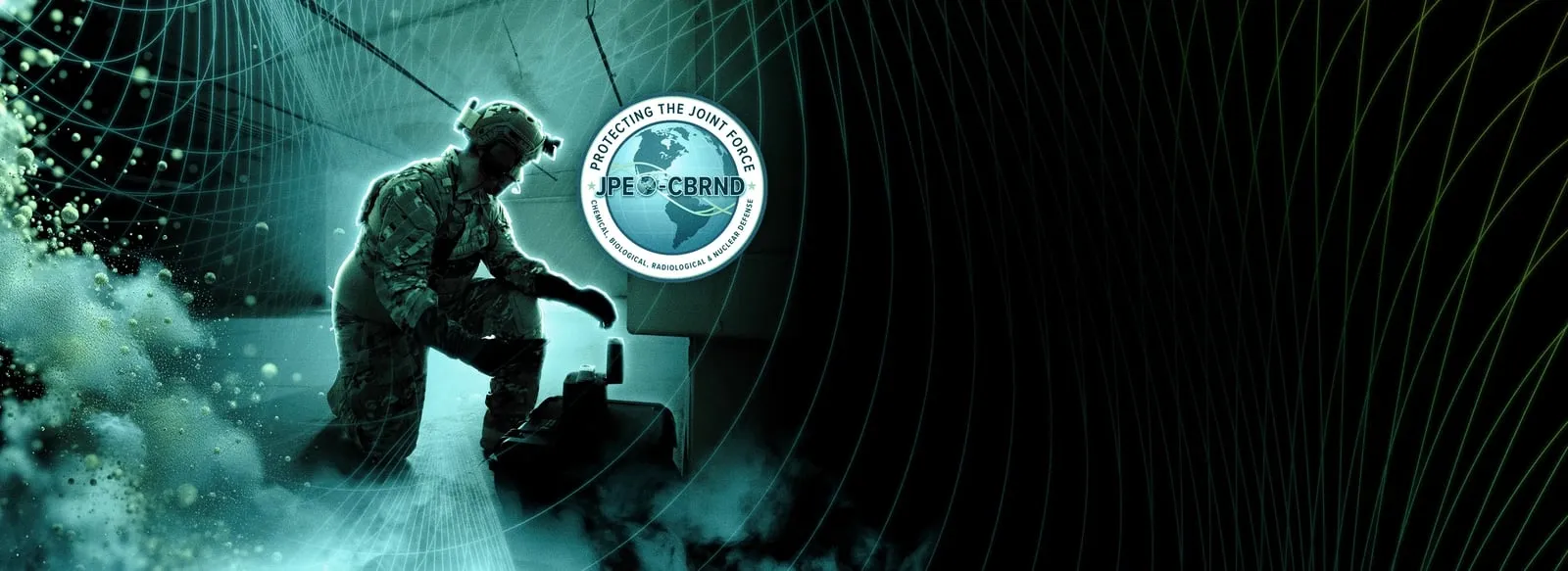
At The Forefront of Biodefense
The United States' most distinguished military forces depend on Biomeme's advanced molecular detection solutions for critical testing needs. Our system plays a crucial role in two key Department of Defense Programs of Record, the Joint Handheld Bio-Agent Identifier (JHBI) and the Joint Biological Tactical Detection System (JBTDS).
Learn MoreWhat Makes Field Confirmatory Detection Possible
Covers a compact, battery-powered real-time PCR device with an integrated heating block, optical fluorescence detection and wireless connectivity that receives test instructions from a phone or tablet — the core of running confirmatory molecular tests without a laboratory.
Covers an automated sample-preparation system in which a disposable cartridge docks with a reusable processing unit that sequentially mixes the sample with lysis and wash reagents — removing manual pipetting, and with it the training burden and contamination risk that normally keep molecular testing inside a lab.
Covers a lightweight portable analyzer using a moving-magnet mechanism: a heated block holds the sample tubes while a movable carriage carries the optics, performing temperature cycling and fluorescence detection in a smaller and lighter package than a fixed-optics design allows.
Covers nucleic-acid extraction using a porous medium that behaves as a one-way valve: fluid flexes around the medium on the way in, then is forced through it on the way out, capturing and purifying the genetic material in a single hand-operated motion with no power required.
Published patent applications
The following are published international (PCT) applications, not granted patents.
Covers detecting and quantifying a target nucleic acid by amplifying it in competition with a reference molecule, which allows a quantitative answer at the point of care without running a standard curve.
Covers guide RNA-protein complexes carrying adapter regions of altered nucleotides, used to control the rate of enzymatic cutting and amplification during nucleic acid processing.
Covers a detergent, solubilizer and cyclodextrin combination that stabilizes both the enzyme and the nucleic acids while a sample is prepared for amplification — part of what makes shelf-stable field reagents workable.
See the complete Biomeme patent portfolio.
Biothreat Detection: Field Identification Methods and Specifications
Open technical reference — methods, identification levels, full specifications and cited sources. No form, no gate.
Closing the CBRNE Gap: The Operational Cost of Slow Biological Confirmation
The CBRNE five-domain framing, what a presumptive-to-confirmatory delay actually costs operationally, and the time-to-result constraint that closed the gap in the field. Companion piece to the technical reference above. No form, no gate.
Technically reviewed by
Scientific Advisory Board, Biomeme; Professor of Neurology
Professor of Neurology at the Uniformed Services University of the Health Sciences and a member of Biomeme’s Scientific Advisory Board. Founding director of the DARPA Biological Technologies Office.
Last reviewed
Specifications on this page are checked against current product documentation at each review.
Full-spectrum CBRN context
Biothreat detection is one layer of a wider capability. See how the biological layer fits alongside chemical, radiological, nuclear and explosive detection.
CBRN detection solutionsBiothreat Detection FAQs
Authorized Distributors
Available through these authorized defense and government supply chain partners.






REQUEST DATASHEET
Request a datasheet to learn more about our platform.
Ready to Equip Your Team?
Contact us to learn more about the Biowarfare Detection Suite, request a demo, or discuss procurement through your preferred distributor.